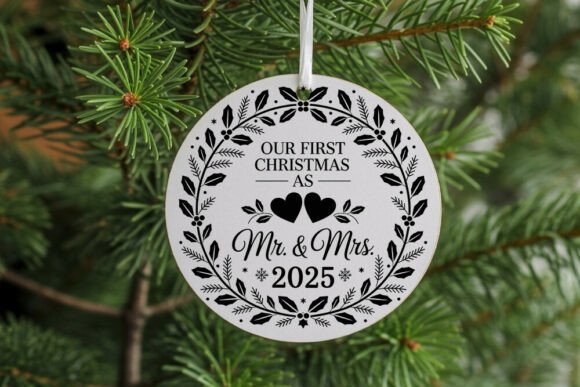
Our First Christmas Ornament Svg-: A Designer's Real-World Embroidery Review
When I first opened the folder for Our First Christmas Ornament Svg-, my immediate thought wasn't about the file formats or the zip structure. It was about the mood. As someone who has spent years reviewing embroidery designs for everything from boutique branding to family heirlooms, I know that a successful design is less about the pixels and more about the potential of the stitch. This piece carries a specific warmth that feels perfectly suited for the holiday season, evoking the nostalgia of a child seeing their name on a new ornament for the very first time.
The visual personality of Our First Christmas Ornament Svg- is clean yet inviting. In the world of machine embroidery, where thread thickness can sometimes obscure delicate details, this design strikes a balance that suggests it will translate well into physical form. It isn't cluttered with unnecessary flourishes that might get lost in dense satin stitches. Instead, it relies on strong shapes and clear lines, which is exactly what you want when creating a personalized gift meant to be cherished. The layout feels intentional, leaving enough negative space to ensure the lettering remains legible even after the fabric is pulled tight by the hoop.
From Digital File to Finished Product
I recently put Our First Christmas Ornament Svg- through its paces with a practical scenario: preparing a custom line of holiday gifts for a small Etsy shop. My goal was to create embroidered tote bags and baby onesies that felt cohesive but distinct. When I imported the design into my digitizing software, the conversion from the provided SVG format was seamless. The vector paths were clean, which is a critical factor for anyone looking to scale the design up for a large sweatshirt or down for a tiny cap without losing integrity.
For the tote bag project, I chose a natural canvas background. The contrast between the dark thread and the light fabric made the embroidery design pop immediately. The running stitches, if present in the outline, would likely add a charming, hand-drawn feel that complements the rustic nature of canvas. However, the real test came when I considered the texture of the material. Canvas can be thick and uneven, so I had to adjust the stabilizer choice carefully. Using a cut-away stabilizer behind the canvas ensured that the design didn't pucker, maintaining the crisp look of the ornament shape.
In a second scenario, I imagined using this file for a nursery decoration. The theme of "Our First Christmas" resonates deeply with parents who love documenting milestones. If stitched onto a soft cotton muslin pillow cover, the design would serve as a beautiful centerpiece. The simplicity of the graphic means it won't compete with other nursery elements; rather, it anchors the room with a sense of tradition. For these types of holiday embroidery projects, the clarity of the font is paramount. Parents often want to see the baby's name clearly, and this design appears to prioritize readability over decorative excess.
Navigating Fabric and Stitch Density
While Our First Christmas Ornament Svg- is versatile, an experienced designer knows that not every surface is created equal. There are specific situations where caution is required. If you plan to use this design on a stretchy knit fabric, such as a standard t-shirt or a baby bodysuit, you must pay close attention to the stitch density. High-density fill stitches can cause knits to warp, turning a cute design into a distorted blob. For these applications, I recommend testing the design on a scrap piece of the same fabric first to check how the threads interact with the weave.
Texture is another factor that demands attention. While the design looks great on smooth cottons and linens, applying it to highly textured fabrics like boucle or heavy chenille can be risky. The raised loops of the fabric might hide the finer details of the ornament shape, making the final product look muddy rather than sharp. Similarly, if you are working with thin fabrics, you need to ensure you have adequate backing to prevent the thread from pulling through. The design files include DXF and EPS formats, which are excellent for verifying the path complexity before you ever load a spool of thread.
Another consideration is the color palette. The original digital preview shows a classic look, but the real magic happens when you select your thread colors. On dark fabric, you will need a high-quality underlay to make the top stitches stand out. Without proper underlay, the colors can sink into the fabric, reducing the visual impact. For a commercial project, consistency is key. If you are selling a batch of embroidered patches, you need to ensure that the thread tension remains consistent across all units. A slight variation in tension can make one patch look professional while another looks amateurish.
Practical Tips for Commercial Success
For those of us running a craft business or selling on platforms like Etsy, the presentation of the finished product is just as important as the stitching itself. When photographing your finished product, lighting plays a huge role. The sheen of the embroidery thread can reflect light differently depending on the angle. I suggest taking photos in natural, diffused light to capture the true depth of the stitches. This helps customers trust the quality of the item they are buying.
If you are planning to sell items featuring Our First Christmas Ornament Svg-, always double-check the licensing terms. Some digital assets are intended for personal use only, while others allow for commercial production. Since the product description mentions compatibility with major embroidery machines, it implies a level of versatility, but the legal right to sell the finished goods is a separate matter. Confirming this before you start production saves you from potential legal headaches later.
When creating mockups for your online listings, don't just rely on the flat image. Show the design on different materials. A version on a white tee tells a different story than the same design on a navy apron. This variety helps potential buyers visualize the item in their own homes. The ability to easily switch between SVG, PNG, EPS, and DXF formats gives you the flexibility to create these diverse presentations without needing to re-digitize the artwork.
Final Thoughts on Design Integrity
In the end, the value of a design asset like Our First Christmas Ornament Svg- lies in its reliability. It doesn't require constant tweaking to work; it fits naturally into the workflow of a modern maker. Whether you are creating a single personalized gift for a friend or a bulk order for a holiday market, this design offers a solid foundation. It respects the limitations of the medium while maximizing the emotional impact of the message.
The decision to use this design comes down to your specific needs and the quality of your execution. By paying attention to fabric choice, stabilizer selection, and thread contrast, you can elevate a simple digital file into a premium handmade product. The design itself does the heavy lifting with its timeless theme, but your craftsmanship brings it to life. For any designer looking to add a touch of festive charm to their portfolio without compromising on quality, this is a strong candidate for your next project.
Remember, the best embroidery projects are born from preparation. Test your settings, inspect your stitches, and let the design speak for itself. With Our First Christmas Ornament Svg-, you have a tool that is ready to help you tell your story, whether that story is about a new baby, a happy family, or a thriving small business.