Small Steps Everyday SVG Cut File: A Designer's Real-World Review
As someone who has spent years stitching designs onto everything from delicate baby onesies to heavy-duty work aprons, I have learned that the difference between a good handmade product and a great one often lies in the design file itself. When I first encountered the Small Steps Everyday SVG Cut File, my initial reaction was curiosity about how this specific graphic would translate from a digital screen into tangible thread. In the world of Crafts and Graphics, there is a lot of noise, but practical utility is rare. This review focuses on what it actually feels like to take this design and put it under a needle for real client projects.
The First Impression: Mood and Visual Personality
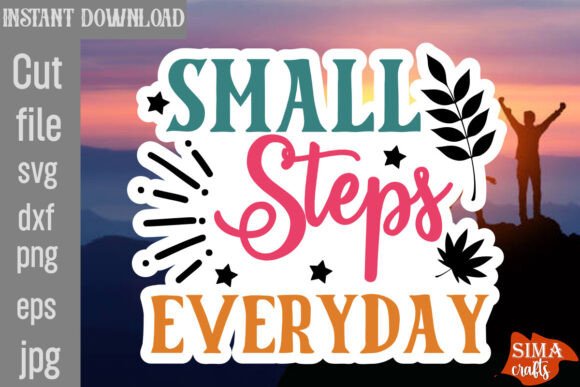
The moment you open the file, the Small Steps Everyday SVG Cut File presents a clean, minimalist aesthetic. It does not scream for attention with chaotic details; instead, it whispers encouragement. The layout suggests a focus on progress and consistency, which makes it emotionally resonant for customers who value personal growth or daily habits. Visually, the lines appear crisp, which is a crucial starting point for any machine embroidery design. There is a sense of calm in the geometry that translates well to fabric. Unlike overly complex illustrations that can look muddy when stitched, this design relies on strong shapes and clear spacing. It feels like a design meant to be worn proudly, perhaps on a tote bag or a cozy sweatshirt, rather than hidden away as a subtle accent.
From Screen to Stitch: Real-Life Application Scenarios
I recently had the opportunity to test this design in a scenario that mimics a typical order for an Etsy seller. The goal was to create a custom embroidered tote bag for a local yoga instructor who wanted to promote her "daily practice" philosophy. Using the Small Steps Everyday SVG Cut File, I mapped out the placement on a canvas tote. The design worked beautifully here because the negative space allowed the texture of the canvas to breathe while the embroidery provided a tactile focal point. The result was professional and polished, elevating a simple canvas bag into a boutique-quality accessory.
This same design also shines in the realm of personalized gifts. Imagine a nursery setting where a parent wants to mark their child's milestones. The theme of "small steps" pairs perfectly with baby embroidery projects. Whether stitched onto a muslin blanket or a soft cotton cap, the design conveys warmth without being cluttered. For commercial embroidery projects aimed at small shop owners, this file offers versatility. It fits seamlessly into holiday gift collections, serving as a motivational piece for New Year resolutions or a year-end reflection item. The ability to switch between a satin stitch for the outlines and a fill stitch for solid areas allows the designer to control the weight of the final product, ensuring it doesn't feel too stiff on lightweight fabrics.
Navigating Technical Challenges and Limitations
While the design is promising, every experienced embroiderer knows that no file is universally perfect. There are specific situations where using the Small Steps Everyday SVG Cut File requires careful consideration. For instance, if you are working with small hoop sizes, such as those used for caps or narrow wrist cuffs, you must evaluate the overall dimensions of the vector. If the lettering or graphic elements are too fine, they may become indistinct after stitching. On textured fabrics like bouclé or thick fleece, the definition of the design might get lost, requiring adjustments in thread colors or stitch density.
Another critical area to watch is stretchy fabric. While the design looks stable on paper, applying it to stretchy materials like t-shirt jersey or athletic wear can lead to distortion if the stabilizer is not chosen correctly. The design should be avoided on dark fabrics unless you plan to use a substantial amount of underlay or a contrasting thread color, as the visual impact relies heavily on clarity. Additionally, for products that need frequent washing, such as kitchen towels or aprons, ensure that the stitch density is sufficient to prevent fraying over time. If the design includes tiny corners or intricate curves, these are the areas most prone to breaking down after repeated laundering.
Practical Notes for the Embroidery Designer
To get the best results from this embroidery file, I recommend starting with a test run on scrap fabric. This step is non-negotiable if you are aiming for high-quality finished products. Check the thread color contrast immediately; a light gray thread on white fabric might lack the punch needed for a commercial item. Review the stitch density settings in your digitizing software to ensure the design isn't too dense, which could cause puckering, or too sparse, which could leave gaps in the imagery.
Confirming the hoop size before you begin is essential. You want to avoid having to re-hoop the garment mid-stitch, which can ruin alignment. Inspect small details closely, especially if you are planning to use this for an embroidered patch or a small logo on a hat. Test the design in black and white mockups first to see how the shapes hold up without the distraction of color. Compare how it looks against both light and dark fabric backgrounds to ensure versatility. Always use proper stabilizer suited to the fabric type; a cut-away stabilizer is often best for items that will be washed frequently, while tear-away might suffice for decorative pillows.
Impact on Product Value and Brand Consistency
In the competitive landscape of handmade goods, the quality of your design assets directly influences customer trust. A clean, well-executed Small Steps Everyday SVG Cut File signals professionalism. When a buyer receives a handmade product that features sharp, clear stitching, they are more likely to perceive the brand as reliable and high-end. This design supports brand consistency because its simple, motivational theme can be applied across various product lines, from custom apparel to digital product previews. It helps in creating a cohesive look for Etsy listings or craft fair booths.
Furthermore, the design enhances the giftability of your items. People love giving gifts that carry a message, and this file provides a perfect vehicle for that sentiment. Whether it is a wedding gift celebrating a new journey together or a corporate swag item for a team building event, the visual appeal of the design adds value beyond the cost of the raw materials. It engages buyers by connecting emotionally with their desire for progress and stability.
Final Thoughts on Usage and Licensing
Before diving into production, remember that the Small Steps Everyday SVG Cut File comes as a digital download including an SVG for Cricut, a DXF for Silhouette, an EPS vector, and a PNG. However, specific stitch counts, exact machine compatibility, and license terms for selling finished items are not explicitly detailed in the standard file description. As a prudent designer, you must verify the licensing agreement to ensure you are permitted to sell physical goods made from this design. Check whether the license covers commercial use for crafter business items or if it is restricted to personal projects only.
Ultimately, the Small Steps Everyday SVG Cut File is a solid addition to any library of design assets. It balances simplicity with emotional depth, making it suitable for a wide range of applications from holiday embroidery to boutique branding. By testing thoroughly and respecting the technical limitations of embroidery, you can transform this digital vector into a cherished finished product that stands out in a crowded market.