Thanks for Being You SVG Cut File Review
When I first opened the download folder for the Thanks for Being You SVG Cut File, my immediate thought wasn't about the file formats or the pixel resolution. It was about the sentiment. In a market flooded with generic "Love" or "Happiness" designs, this specific phrase carries a quiet, personal weight that feels perfect for a heartfelt gift or a boutique brand message. As a designer who has spent years troubleshooting stitch density and judging how text translates from screen to fabric, I wanted to see if this design could stand up to the rigors of real-world embroidery.
The product falls squarely into the Crafts and Graphics categories, but its true value lies in its versatility as a digital embroidery file. The package includes a robust set of assets: an SVG for Cricut users, a DXF for Silhouette enthusiasts, a vector EPS, and a high-resolution PNG. However, for those of us working primarily with machine embroidery, the path from these vector files to a stitched masterpiece requires a bit of strategic planning.
First Impressions: Mood and Visual Personality
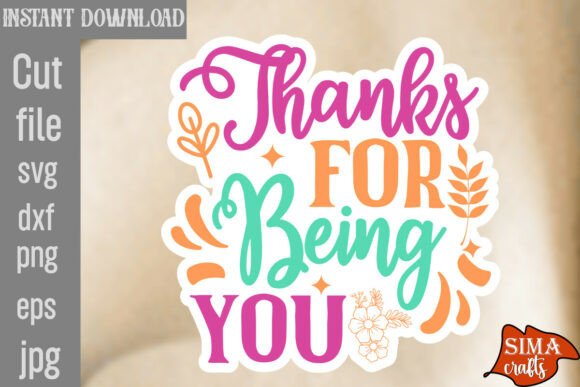
The visual personality of Thanks for Being You SVG Cut File is warm and inviting. It doesn't scream for attention; instead, it whispers a compliment. This makes it an ideal candidate for projects where subtlety is key. When I imagine this design on a soft, heather-grey sweatshirt or a crisp white kitchen towel, the mood shifts instantly to something cozy and appreciative. It feels less like a logo and more like a handwritten note stitched onto fabric.
From a layout perspective, the spacing between letters appears balanced, which is crucial for maintaining readability after stitching. In my experience, designs that are too cramped often suffer when converted to satin stitches, leading to thread breaks or pucker. This design seems to have enough breathing room to handle a standard fill stitch without losing its character. It strikes a balance between decorative flair and legibility, making it suitable for both large statement pieces and smaller accents.
Real-World Application: From Design to Finished Product
Let's talk about a specific scenario. Imagine you are an Etsy seller preparing a holiday collection. You want to create a line of personalized aprons for home cooks. You select Thanks for Being You SVG Cut File as the central motif. The goal is to place this on the chest pocket of a heavy-duty canvas apron. Because the design is clean and the typography is straightforward, it would likely translate beautifully into a custom apparel item.
However, the success of this project depends heavily on your execution. If you were to use this on a baby onesie, the emotional impact would be immense. Parents love receiving gifts that acknowledge their unique parenting style. Here, the design acts as a personalized gift that elevates a simple garment into a keepsake. The contrast between the thread color and the fabric will determine the final look. A light pastel thread on a dark navy onesie might get lost, whereas a gold metallic thread on a cream background could make the design pop with elegance.
I also envision this design thriving on a tote bag design. For a craft fair vendor, selling a tote with this message reinforces a brand identity centered on appreciation and community. It turns a functional item into a conversation starter. The design's simplicity ensures it won't clash with other elements if you decide to add a small icon or secondary text later. It serves as a solid foundation for a cohesive small shop product line.
Where to Exercise Caution
While this design is versatile, no single file works perfectly everywhere. There are specific scenarios where Thanks for Being You SVG Cut File requires careful consideration. First, consider the hoop size. If you are working with a small 4x4 inch hoop, the text might become too dense, especially if you choose a script font for the conversion. Small details can get lost in the stitching process, resulting in a muddy appearance.
Textured fabrics present another challenge. Embroidering on a thick, bouclé knit or a fuzzy fleece can cause the stitches to sink, making the lettering difficult to read. Similarly, stretchy fabrics like jersey require a stabilizer that provides significant support, or the design may distort over time. If you plan to wash the item frequently, such as a kitchen towel or a child's shirt, you must ensure the stitch density is sufficient to prevent fraying at the edges.
Detailed corners and tiny lettering are areas where this design needs scrutiny. If the original vector contains sharp serifs or intricate curves, they may not hold up well in a running stitch or a low-density satin stitch. On curved surfaces like caps, the curvature of the hat can flatten the design, potentially altering the intended proportions. Always test the design on a scrap piece of the actual fabric before committing to the final product. This step is non-negotiable for any professional embroidery project.
Impact on Value and Brand Perception
The quality of your embroidery directly influences customer trust. A sloppy stitch job can ruin even the most beautiful design. Conversely, a clean, precise execution of Thanks for Being You SVG Cut File signals professionalism. When a buyer receives a handmade product where every stitch aligns perfectly, they perceive higher value. This is particularly important for commercial embroidery clients who expect consistency across multiple items.
The design also enhances giftability. A message that says "Thanks for Being You" is inherently emotional. When combined with high-quality craftsmanship, it becomes a memorable token of appreciation. This can lead to repeat customers and positive reviews for your craft business. It transforms a simple transaction into a meaningful interaction, which is the hallmark of a successful Etsy seller or boutique owner.
Practical Designer Notes for Success
Before you start stitching, there are several technical steps to ensure your finished product shines. First, review the stitch density settings in your digitizing software. If the design feels too sparse, increase the density slightly to improve coverage, but be careful not to over-stitch, which can cause puckering. Check the thread colors against your fabric texture; sometimes a color that looks good on screen fails to provide enough contrast on fabric.
Use a proper stabilizer. For woven fabrics, a cut-away stabilizer is often best for durability. For knits, a tear-away or wash-away might work, provided the fabric isn't too stretchy. Inspect small details closely; if any part of the text looks too thin in the vector preview, it will likely disappear in the final stitch. Test the design in black and white mockups to verify the shape and flow before investing time in threading.
Finally, confirm licensing terms. While the download includes various file types like SVG and DXF, the license for using the design in finished products for sale varies by creator. Ensure you have the right to sell items made with this design if you intend to use it for commercial design assets. If you are unsure, reach out to the designer or check the documentation included in the zip file.
In conclusion, Thanks for Being You SVG Cut File is a thoughtful addition to any crafter's library. It offers a blend of emotional resonance and practical utility that fits seamlessly into a wide range of projects, from nursery decor to boutique branding. With careful attention to fabric choice, stabilizer selection, and stitch settings, this design can help you create exceptional handmade products that resonate deeply with your audience.