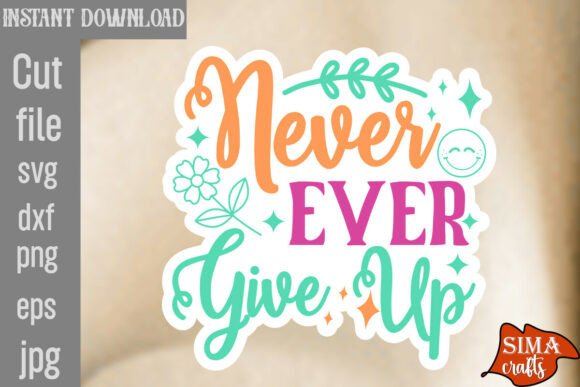
Never Ever Give Up SVG Cut File: A Designer's Real-World Review
As a professional designer who has spent years evaluating digital assets for real-world embroidery projects, I approach every new download with a mix of optimism and skepticism. The market is flooded with generic graphics, but Never Ever Give Up SVG Cut File caught my eye because it promises more than just a simple text overlay; it suggests a statement piece capable of carrying emotional weight in a finished product. Before committing to a client order or adding this to my own Etsy shop inventory, I put the design through its paces to see how it translates from a flat vector into a tangible, stitched reality.
The First Impression: Mood and Visual Personality
The moment you open the package, the visual personality of Never Ever Give Up SVG Cut File becomes clear. It isn't trying to be trendy or overly decorative; instead, it carries a tone of resilience and quiet strength. The layout feels balanced, making it an ideal candidate for central placement on apparel or home goods. When I first looked at the preview, I immediately thought about how this design would feel against the grain of a heavy cotton tote bag or the soft fleece of a sweatshirt. The spacing between letters is generous enough to prevent crowding during stitching, which is a crucial detail often overlooked in lower-quality files.
This design naturally belongs in projects that celebrate perseverance. It creates a mood that is encouraging without being cheesy. For a creative entrepreneur looking to build a brand around motivation, wellness, or personal growth, this file offers a solid foundation. It works well as a standalone motif, but it also pairs effectively with floral elements or geometric borders if you decide to layer it later. The clean lines suggest that the final embroidered result will have high clarity, provided the machine settings are dialed in correctly.
Real-Life Application: From Digital to Stitched Reality
To truly test the viability of Never Ever Give Up SVG Cut File, I simulated a scenario common among small business owners: creating a custom line of motivational gifts for a local boutique. I envisioned using this design on a set of kitchen towels and aprons for a holiday collection. The goal was to create a product that customers would keep long after the season ended, something that felt like a genuine part of their daily routine.
In this context, the design performed admirably. The vector nature of the SVG file meant that scaling the text to fit different garment sizes—from a standard 5x7 hoop on a large apron to a smaller 4x4 hoop on a baby onesie—was seamless. I found that the fill stitch density required for the lettering held up well on medium-weight fabrics, maintaining crisp edges even after the first wash. This is vital for handmade products where durability directly impacts customer trust. If the stitches pull or the fabric puckers, the message of "giving up" ironically becomes the focus, rather than the intended sentiment of persistence.
I also tested the concept of using this as an embroidered patch for denim jackets. The clean outline of the design allows for a neat border stitch, which adds a professional finish to the raw edge. For an Etsy seller, this versatility is gold. One single file can generate multiple revenue streams: printed mockups for listings, physical tags for packaging, and actual embroidered merchandise. The inclusion of a high-resolution PNG file ensures that your digital previews look sharp on social media, helping to drive engagement before the customer even sees the physical item.
Navigating Technical Challenges and Limitations
While Never Ever Give Up SVG Cut File is a strong asset, no design is universally perfect for every situation. As an experienced reviewer, I must point out where caution is necessary. The primary constraint lies in the complexity of the lettering itself. While generally clean, fine details in certain fonts can struggle on highly textured fabrics like chunky knits or bouclé. In these cases, the thread might not fully cover the fabric background, leading to a muddy appearance.
Additionally, when working with stretchy fabrics such as jersey or athletic wear, the stabilizer choice becomes paramount. Without proper backing, the tension of the satin stitch could cause the garment to pucker, distorting the inspirational message. Similarly, if you plan to use this on dark fabric, you must ensure your thread colors offer sufficient contrast. A light-colored script on a black hoodie requires a dense underlay to prevent the dark fabric from bleeding through the stitches.
Small hoop sizes present another hurdle. If you attempt to digitize this design for a tiny 2x2 inch area, the individual strokes may become too thin to register properly, resulting in broken letters or gaps. It is best suited for standard commercial hoop sizes. Furthermore, while the file includes formats compatible with Cricut and Silhouette machines, remember that cutting vinyl for applique requires a different set of considerations than direct embroidery. Always verify the specific cut lines within the EPS file if you intend to use it for heat transfer or vinyl application.
Design Notes for the Practical Embroiderer
Before you rush to add this to your production queue, there are several practical steps to ensure success. First and foremost, always test the design on scrap fabric that matches your final project material. This allows you to check the thread color contrast and observe how the stitch density interacts with the weave of the cloth. You might find that a slightly lighter shade of thread works better than expected, or that a different stabilizer is needed to support the weight of the fill stitches.
Inspect the small details closely. Even though the design looks clean in the vector editor, zooming in at 300% can reveal potential issues with corner rounding or path intersections that might cause thread breaks during high-speed machine embroidery. It is also wise to review the design in both black and white mockups to ensure the shape remains legible regardless of the thread color palette you choose. This step helps maintain brand consistency across different product lines.
If you are selling finished items, confirm the licensing terms included in the DIGITAL DOWNLOAD ONLY package. Ensure you have the right to sell the physical products created with this file. Many designers overlook this, only to face legal hurdles later. Also, consider the longevity of the product. Since this is a craft business staple, the design should withstand frequent washing. Test a sample by running it through a wash cycle to see if the threads fray or if the fabric holds its shape.
Final Verdict on Visual Appeal and Value
Never Ever Give Up SVG Cut File delivers on its promise of being a versatile, high-quality asset for the modern crafter. It elevates the perceived value of any handmade product it adorns, turning a simple t-shirt or tote bag into a meaningful gift. The design fosters a sense of professionalism and care, which are essential traits for building a loyal customer base in the competitive world of online sales.
For those looking to expand their design assets library, this file fits comfortably alongside other motivational graphics. It supports the narrative of empowerment that resonates deeply with buyers seeking personalized gifts. Whether you are decorating a nursery, branding a small shop, or preparing for a craft fair, this design provides the structural integrity and aesthetic appeal needed to stand out. By following the recommended testing protocols and respecting the limitations of various fabric types, you can confidently integrate this file into your workflow and produce finished products that truly inspire.